Do Carbon Wheels Make You Faster 5 Honest Truths About Speed Acceleration and Aerodynamics
Do Carbon Wheels Make You Faster 5 Honest Truths About Speed Acceleration and Aerodynamics
When cyclists look for the most effective upgrade to improve bicycle performance, upgrading from standard aluminum wheels to a premium carbon wheelset is almost always at the top of the list. However, with premium price tags, many riders naturally ask two critical questions: Do carbon wheels actually make you faster, or is carbon wheel performance mostly marketing hype?
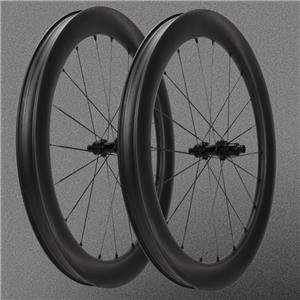
The short answer is yes—a high-quality carbon wheelset does make riders faster. Upgrading to carbon bicycle wheels reduces rotational mass, enhances aerodynamic efficiency, and improves overall power transfer. In this comprehensive guide, cyclists will discover five honest truths about how upgrading to a performance carbon fiber rim setup transforms real-world speed, acceleration, and riding efficiency.
1. Truth One: Aerodynamics Deliver the Biggest Speed Gain
When riding on flat or rolling terrain, aerodynamic drag represents up to 80% of the total resistance a cyclist must overcome at speeds above 30 km/h. Deep-section carbon rims are engineered to slice through the air smoothly, managing airflow over the tire-to-rim transition to minimize turbulence.
- Aerodynamic Watt Savings: A set of 45mm to 50mm aero carbon wheels saves between 10 and 18 watts at 40 km/h compared to traditional shallow aluminum rims.
- Real-World Speed Advantage: For a rider maintaining a constant output of 200 watts, aero carbon wheels yield an average speed increase of 1.0 km/h to 1.5 km/h over flat distances without extra physical effort.
Riders seeking maximum speed efficiency often upgrade to a 700c carbon wheelset designed with modern NACA aerodynamic rim profiles. The aerodynamic advantage of deep carbon rims becomes increasingly dominant as riding speed increases.
2. Truth Two: Rotational Weight Savings Noticeably Improve Acceleration
While static weight reduction helps on steep climbs, reducing rotational mass at the outer edge of the bicycle wheel dramatically improves how quickly a bicycle responds to pedal effort. A performance carbon fiber rim typically weighs 300g to 600g less per pair than an equivalent aluminum rim.
Lowering rotational inertia means less kinetic energy is required to spin carbon bicycle wheels up to speed. As a result, riders feel immediate responsiveness when sprinting out of corners, accelerating during group rides, or making quick attacks on short, punchy climbs.
Performance Comparison: Carbon Wheels vs. Aluminum Wheels
| Wheel Specification | Standard Aluminum Wheelset | Performance Carbon Wheelset | Primary Real-World Benefit |
|---|---|---|---|
| Average Weight (Pair) | 1,750g – 2,000g | 1,250g – 1,450g | Easier climbing and lower rotational inertia |
| Rim Depth Range | 20mm – 30mm | 38mm – 60mm | Significant reduction in aerodynamic drag |
| Lateral Stiffness | Moderate (flexes under load) | High (direct power transfer) | Immediate acceleration and precise handling |
| Wattage Efficiency | Baseline Efficiency | Saves 10 – 18 Watts @ 40 km/h | Higher average speeds for the same effort |
3. Truth Three: Lateral Stiffness Maximizes Power Transfer
Speed is not only about weight and air resistance; speed is also about power transmission efficiency. Under heavy sprinting or standing climbs, aluminum bicycle rims experience subtle lateral flexing, which absorbs pedal force that should otherwise propel the bicycle forward.
Carbon fiber construction allows engineers to tune carbon rim layup orientation precisely. Precise carbon layup delivers exceptional lateral stiffness, ensuring that every watt generated by cyclist legs translates directly into forward motion without energy loss.
Cyclists upgrading to a rigid carbon wheels road bike setup experience immediate power delivery during standing sprints and high-wattage efforts.
4. Truth Four: Rim Depth and Terrain Profile Determine Actual Gains
Different carbon wheel designs perform uniquely across varied riding scenarios. Choosing the right rim depth for local riding terrain is key to maximizing overall speed performance:
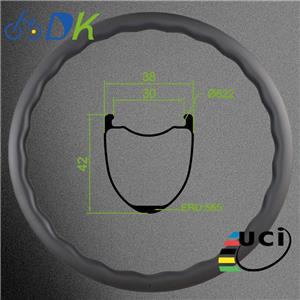
- Climbing Carbon Wheels (30mm – 38mm Depth): Climbing carbon wheels focus on minimizing static weight to provide maximum efficiency on long, steep ascents.
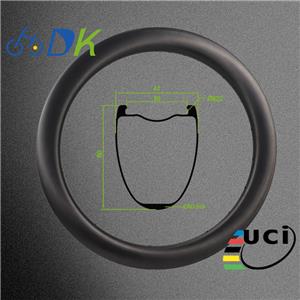
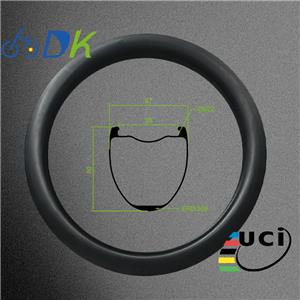
- All-Rounder Carbon Wheels (45mm – 50mm Depth): All-rounder carbon wheels offer the optimal balance of aerodynamic drag reduction, lightweight climbing ability, and crosswind stability.
- Aero Carbon Wheels (60mm+ Depth): Aero carbon wheels deliver maximum aerodynamic efficiency and momentum retention on high-speed flat courses.
5. Truth Five: Modern Carbon Manufacturing Has Eliminated Past Drawbacks
Riders historically worried about carbon rim durability, braking safety, or crosswind instability. Modern carbon manufacturing technology has effectively solved historical carbon wheel limitations.
Advanced impact-resistant resin systems make modern carbon rims rugged enough for intense training, rough pavement, and demanding gravel conditions. Furthermore, modern disc-brake integration eliminates carbon rim brake wear completely, providing consistent, reliable stopping power in all weather conditions.
Wider internal carbon rim profiles also accommodate modern tubeless tires, reducing rolling resistance while enhancing rider comfort and traction on high-speed corners.
Final Verdict: How Much Faster Will Carbon Wheels Make You?
Upgrading to a performance carbon wheelset provides a multi-faceted speed advantage. By combining aerodynamic watt savings, reduced rotational weight, and superior lateral stiffness, carbon wheels deliver tangible speed gains that cyclists can feel on every single ride.
Whether cyclists want to hold higher cruise speeds on flat roads, attack steep ascents with less fatigue, or sprint more responsively, a high-quality carbon wheelset remains one of the single most effective performance upgrades available.