How to Choose a Reliable Carbon Wheel Manufacturer OEM Factory Standards and Production Cost Breakdown
How to Choose a Reliable Carbon Wheel Manufacturer OEM Factory Standards and Production Cost Breakdown
For bicycle brand owners, wholesale distributors, and fleet purchasing managers, selecting a reliable carbon wheel manufacturer is a critical commercial decision. As global demand for lightweight road, gravel, and mountain bike wheelsets expands, partnering with an experienced OEM factory ensures consistent product quality, competitive pricing, and scalable production capacity.
Navigating the global carbon composite supply chain requires understanding factory capabilities beyond basic marketing claims. In this comprehensive B2B buyer guide, we break down essential OEM manufacturing standards, carbon fiber rim production cost structures, quality control testing protocols, and custom private label manufacturing services.
1. Essential Evaluation Criteria for Selecting a Carbon Rim Supplier
When auditing a potential carbon rim supplier or complete wheelset factory, commercial buyers should evaluate specific operational benchmarks to ensure long-term supply chain stability:
Raw Material Traceability: Tier-1 manufacturers source verifiable Japanese carbon fiber prepreg (such as Toray T700, T800, or T1000) with strict cold-storage handling protocols to preserve resin bonding integrity.
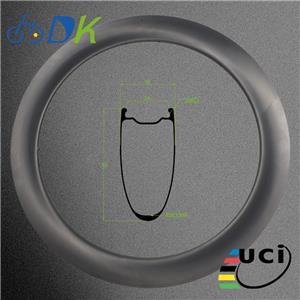
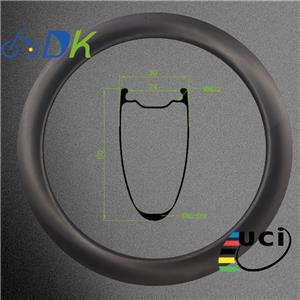
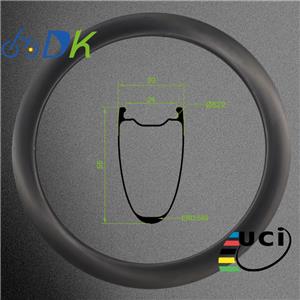
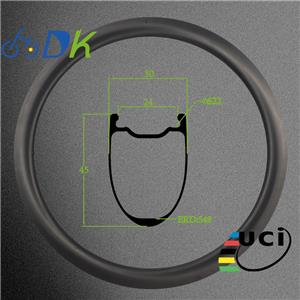
In-House R&D and Mold Fabrication: Leading OEM factories maintain dedicated tooling departments to develop custom aerodynamic rim profiles, avoiding shared off-the-shelf open molds that lack market differentiation.
Scalable Production Capacity: A robust manufacturing facility must demonstrate reliable monthly yield capacities to meet seasonal wholesale order spikes without compromising delivery timelines.
Partnering with a certified carbon wheel manufacturer guarantees that bulk production runs adhere strictly to international safety and dimensional tolerances.
2. Production Cost Breakdown: Understanding OEM Carbon Wheel Pricing
Understanding the cost structure of high-performance carbon bicycle wheels helps purchasing teams evaluate supplier quotes accurately and avoid low-quality compromises.
Manufacturing costs for premium carbon fiber rims are primarily driven by four key operational factors:
Carbon Prepreg Fiber Grade (35% - 40% of Cost): Higher-modulus fibers like T800 and T1000 offer superior strength-to-weight ratios but carry significantly higher raw material costs compared to standard T700 weaves.
Labor-Intensive Precision Layup (25% - 30% of Cost): Each carbon rim requires skilled technicians to manually position up to 50 distinct carbon ply layers into precision molds to ensure multi-axis structural reinforcement.
Tooling and Curing Processing (15% - 20% of Cost): Advanced high-pressure autoclave or internal bladder molding systems require substantial capital investment and precise thermal cycle management.
Quality Control and Certification (10% - 15% of Cost): Rigorous destructive testing, X-ray void inspection, and UCI safety certification add manufacturing overhead but ensure zero field failures.
B2B Manufacturing Comparison: Standard Open-Mold vs. Custom OEM Production
| Manufacturing Dimension | Standard Open-Mold Production | Custom OEM / Private Label Factory | Commercial Advantage for Buyers |
|---|---|---|---|
| Brand Intellectual Property | Shared generic rim profiles across vendors | Exclusive proprietary mold designs and branding | Protects market uniqueness and higher retail margins |
| Custom Layup Customization | Fixed stiffness and resin formulations | Tailored carbon layups for specific disciplines | Allows targeted weight, stiffness, or compliance tuning |
| Quality Assurance (QA) Standard | Basic batch sampling inspections | 100% individual rim tension and X-ray testing | Drastically reduces warranty claims and return rates |
| Supply Chain Stability | Variable lead times from trading agents | Direct factory scheduling and material planning | Ensures predictable inventory delivery for wholesale orders |
3. Quality Assurance Standards and Laboratory Testing Protocols
A reputable OEM carbon wheel factory enforces rigorous destructive and non-destructive laboratory testing prior to commercial release. Essential quality control checks include:
Vertical Impact Resistance Test: Simulates high-speed rock and pothole strikes on the tire bed to verify rim wall integrity under extreme point loads.
Spoke Hole Pull-Out Strength: Measures the maximum tensile force the carbon spoke bed can withstand before cracking, ensuring long-term spoke tension stability.
Tire Pressure Limit & Burst Testing: Evaluates tubeless tire bead retention limits under over-pressurization to guarantee field safety for end customers.
Commercial buyers seeking custom solutions can consult a specialized carbon rim supplier to review full lab test reports and factory ISO compliance certifications.
4. Customization and Private Label (ODM/OEM) Capabilities
To establish a distinct brand identity in competitive markets, bike brands require versatile OEM customization services. Leading manufacturing partners offer integrated private label solutions:
Custom Water-Slide Decals and Laser Etching: High-durability under-clearcoat or ultra-light matte decal finishes tailored to brand graphics.
Spoke Bed and Hub Drill Options: Customized spoke hole angles and counts (16H to 32H) compatible with internal or external spoke nipples.
Custom Rim Widths and Depths: Engineered internal channel widths optimized for modern wide tubeless gravel or aero road tires.
Outfitting a commercial fleet or launching a new product line with tailored custom carbon wheels allows distributors to command premium market positioning.
Final Verdict: Building a Sustainable Carbon Manufacturing Partnership
Choosing a reliable carbon wheel manufacturer requires balancing competitive production costs with uncompromising factory engineering standards. By partnering with a transparent OEM facility that prioritizes raw material traceability, advanced molding technology, and strict quality control, bicycle brands and wholesalers can deliver world-class wheelsets while safeguarding their brand reputation.
Investing in direct factory relationships provides purchasing teams with long-term supply chain security, proprietary product innovation, and superior commercial profitability.