Carbon Rim Depth Explained: 35mm vs 45mm vs 60mm for Road Cycling
Carbon Rim Depth: 35mm vs 45mm vs 60mm
Choosing the right carbon rim depth is important for road cycling performance. Whether you ride mountain roads, flat courses, or mixed terrain, rim depth affects aerodynamics, wheel weight, and crosswind handling.
Among popular carbon road rims, 35mm, 45mm, and 60mm profiles offer different advantages. This guide explains their differences and helps cyclists, wheel builders, and bicycle brands choose suitable carbon rim configurations.
1. What Is Carbon Rim Depth?
Carbon rim depth is the radial distance between the tire-side edge of the rim and the inner edge facing the hub. Common road cycling options include 35mm, 45mm, and 60mm.
In general, deeper carbon rims offer greater aerodynamic design potential, while shallower profiles often provide lower weight and more manageable crosswind handling.
However, rim depth alone does not determine wheel performance. Rim width, tire size, carbon fiber layup, and spoke configuration also play important roles.
2. 35mm vs 45mm vs 60mm Carbon Rims: Key Differences
Each carbon rim depth offers different characteristics. The following comparison explains their typical advantages and suitable riding conditions.
35mm Carbon Rims
Rim Profile: Shallow section
Aerodynamic Potential: Moderate
Weight: Often lighter
Crosswind Sensitivity: Generally lower
Typical Applications: Climbing, endurance riding, and mountain roads
45mm Carbon Rims
Rim Profile: Mid-depth section
Aerodynamic Potential: Balanced
Weight: Intermediate
Crosswind Sensitivity: Moderate
Typical Applications: All-round road cycling, mixed terrain, and group rides
60mm Carbon Rims
Rim Profile: Deep section
Aerodynamic Potential: High
Weight: Often heavier
Crosswind Sensitivity: Potentially higher
Typical Applications: Fast flat roads, aerodynamic wheel builds, and racing
Note: These are general design tendencies. Actual performance depends on the complete wheel and tire system rather than rim depth alone.
3. Which Carbon Rim Depth Is Best?
35mm Carbon Rims for Climbing
A 35mm carbon rim is a practical choice for cyclists who prioritize lightweight wheel builds, climbing, and predictable handling.
Compared with deeper designs of similar construction, a 35mm profile generally requires less material and may provide lower rim weight.
Shallower carbon rims are also worth considering for riders who frequently encounter mountain descents or strong crosswinds.
45mm Carbon Rims for All-Round Road Cycling
A 45mm carbon rim offers a useful balance between aerodynamic potential, weight, and handling.
For cyclists who regularly ride both hills and flat roads, a 45mm profile can be a versatile option. It provides more depth for aerodynamic shaping than a 35mm rim without moving to a full deep-section design.
For bicycle brands and wheel builders, mid-depth carbon rims are worth considering when developing versatile road wheelsets.
Explore the DK Composite Carbon Road Rim Collection to compare available road rim profiles and configurations.
60mm Carbon Rims for Aerodynamic Performance
A 60mm carbon rim is commonly selected for performance-oriented road cycling, particularly fast flat courses and racing applications.
Its deeper profile provides greater opportunity for aerodynamic optimization. However, aerodynamic performance depends on rim geometry, tire width, wind angle, and riding speed.
Deeper carbon rims may also be heavier and more sensitive to crosswinds than shallower alternatives. Therefore, riders should consider their actual riding environment before selecting a 60mm rim.
4. How Does Carbon Rim Depth Affect Performance?
Aerodynamics
Deeper carbon rims can reduce aerodynamic drag when designed with suitable rim and tire profiles. However, a well-designed 45mm wheel can perform better than a poorly optimized 60mm wheel under certain conditions.
For the best aerodynamic results, rim width and tire width should be evaluated together. Rim depth alone cannot determine aerodynamic efficiency.
Wheel Weight
Rim depth influences material requirements, but actual weight also depends on carbon fiber construction, layup design, rim width, and reinforcement.
When comparing carbon rims, cyclists should check the published weight of each specific model rather than assuming every shallow rim is lighter than every deep rim.
Crosswind Handling
Deep-section rims can experience greater lateral aerodynamic forces. Riders who frequently encounter strong winds may prefer shallower or mid-depth profiles.
Modern aerodynamic rim shapes can improve handling, but wind angle, rider position, and the complete bicycle setup also influence stability.
5. Carbon Rim Depth for Road and Gravel Applications
Although 35mm, 45mm, and 60mm depths are commonly discussed in road cycling, deep-section carbon rims are also used in performance gravel applications.
Road and gravel rims can differ significantly in width, tire compatibility, and structural requirements. A 60mm gravel rim should not automatically be treated as equivalent to a 60mm road rim.
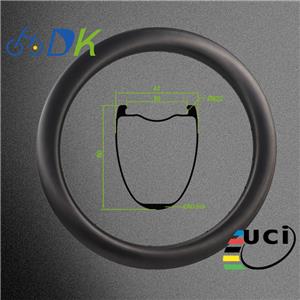
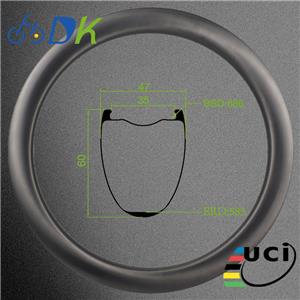
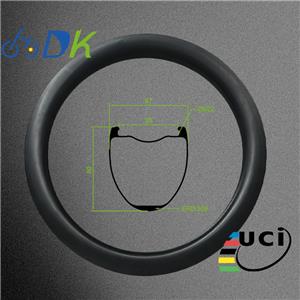
For example, the DK G60TL-47 Aero Carbon Gravel Rim features a 60mm rim depth, 47mm external width, and 35mm internal width.
This wide gravel-oriented design serves different tire and riding requirements from conventional narrow road rims. Buyers should always check tire compatibility, pressure limits, and frame clearance.
DK Composite offers carbon bicycle rim options for different applications. Bicycle brands, distributors, and wheel builders can explore available products and discuss suitable configurations for their projects.
6. Choosing Carbon Rims for OEM Wheel Projects
For bicycle brands and wheel manufacturers, selecting the right carbon rim depth is an important step in developing different wheelset configurations.
Shallower carbon rims are often considered for lightweight climbing wheels, mid-depth rims for all-round road wheelsets, and deeper rims for aerodynamic applications.
In addition to rim depth, professional buyers should evaluate:
- Internal and external rim width
- Carbon rim weight and construction
- Tire and tubeless compatibility
- Spoke hole count and drilling options
- Hub and spoke compatibility
- Quality control and testing requirements
- Available OEM customization options
Explore the DK Composite Carbon Road Rim Collection to identify suitable rim profiles for your wheelset project.
7. Frequently Asked Questions
Is a 60mm carbon rim faster than a 45mm rim?
A 60mm rim may offer aerodynamic advantages at higher speeds, but actual results depend on wheel design, tire compatibility, and wind conditions.
Are 35mm carbon rims good for climbing?
Yes. Their lower weight potential and generally manageable handling make 35mm carbon rims suitable for climbing-oriented wheel builds.
Is 45mm a good all-round carbon rim depth?
Yes. A 45mm carbon rim offers a practical balance of aerodynamic potential, weight, and handling for mixed road cycling conditions.
Does deeper rim depth always mean better performance?
No. The best carbon rim depth depends on riding conditions, tire selection, wheel weight, and individual performance priorities.
Can a 60mm gravel rim replace a 60mm road rim?
Not necessarily. Gravel rims may have significantly different widths, tire requirements, and pressure limits. Compatibility must be evaluated before choosing a rim.
Conclusion: Choosing the Right Carbon Rim Depth
Choosing between 35mm, 45mm, and 60mm carbon rims requires balancing aerodynamics, weight, and handling.
A 35mm rim is well suited to climbing-focused builds, a 45mm rim provides versatile all-round performance, and a 60mm rim offers greater aerodynamic design potential for high-speed riding.
For bicycle brands, wheel builders, and distributors, selecting the appropriate carbon rim depth is an important part of developing a competitive wheelset.
Explore DK Composite Carbon Road Rims or visit the DK Composite Official Website to learn more about our carbon bicycle rim products and discuss OEM wheel projects.