Are Carbon Wheels Tubeless? A Guide to Rim and Tire Compatibility
Are Carbon Wheels Tubeless?
Many modern carbon wheels are designed for tubeless tires, but not every carbon wheelset is tubeless-ready. The material of the rim—carbon fiber—does not determine whether it can be used without an inner tube. The rim’s design, the tire, and the manufacturer’s instructions all matter. Before setting up tubeless, check the exact wheel and tire models rather than relying on appearance or a general description.
A tubeless setup uses a compatible tire and rim to hold air without an inner tube. It commonly also requires a tubeless valve and sealant, unless the wheel and tire manufacturer specifies a different setup. A conventional rim or tire should not be assumed to work tubeless simply because it looks similar to a tubeless-ready product.
What Does “Tubeless-Ready” Mean?
“Tubeless-ready” generally means that a wheel or tire is designed to be used in a tubeless system when set up according to its manufacturer’s instructions. Check the product documentation for the exact model. It should identify whether the rim is approved for tubeless use and specify any required rim tape, valve, tire type, and pressure limits.
Some rims need tubeless rim tape to seal the spoke holes, while others may use a different sealing design. Follow the wheel maker’s instructions for tape type and installation. Incorrect tape, a poorly seated valve, or damage to the rim bed can cause air leaks and may prevent the system from holding pressure.
Check Compatibility Between the Rim and Tire
A safe tubeless setup depends on compatibility between the specific rim and tire. Check both manufacturers’ documentation for approved tire sizes and rim types. Do not rely on tire width alone: two products with similar dimensions may have different compatibility requirements.
Confirm that the wheel model is approved for tubeless use.
Confirm that the tire is tubeless-ready and approved for the rim type.
Check the approved tire-width range for the rim.
Follow the pressure limits provided by the wheel and tire manufacturers.
Use the specified rim tape, valve, and sealant where required.
If the manufacturers’ information is unclear or appears to conflict, contact them or ask a qualified bike mechanic before installing or riding the setup. Do not assume compatibility based only on a successful installation or on the fact that the tire holds air while stationary.
Hooked and Hookless Carbon Rims
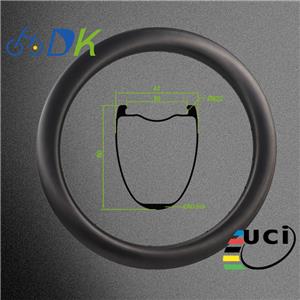
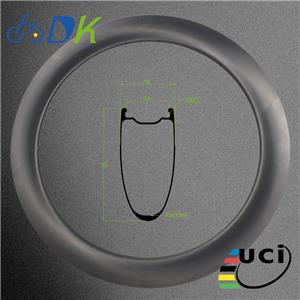
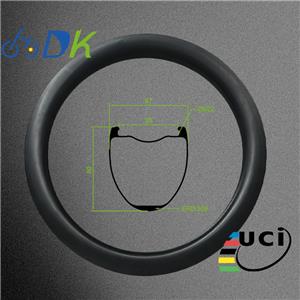
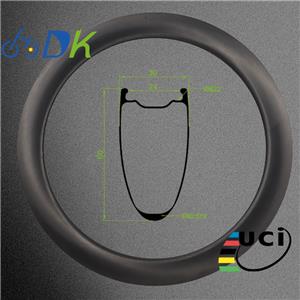
Carbon rims may have a hooked or hookless design. A hooked rim has inward-facing edges that help retain the tire bead. A hookless rim has a different bead-retention design and requires tires specifically approved for that rim type. The two designs are not automatically interchangeable.
For hookless carbon wheels, verify the tire model’s hookless approval, the rim manufacturer’s compatibility information, and the applicable pressure limits. Do not use a tire on a hookless rim unless the tire maker confirms that combination is suitable. A tire that fits a hooked rim is not necessarily approved for a hookless rim.
What You Need for a Tubeless Setup
Depending on the wheel design, a tubeless setup may require tubeless rim tape, a tubeless valve, a compatible tire, and sealant. Some wheels use an integrated or different sealing system, so check the wheel instructions before buying parts. Using the wrong components can lead to air loss, poor bead seating, or difficulty maintaining pressure.
Inspect the rim and tire before installation. Do not use a rim with cracks, impact damage, or a damaged bead seat. Check that the tire is in good condition and that the rim tape covers the required area without blocking the valve opening. If you are unfamiliar with tubeless installation, have a bike shop install and inspect the system.
Basic Tubeless Setup Checks
Read the wheel and tire manufacturers’ setup instructions.
Verify that the exact rim and tire models are compatible.
Install the specified tape and valve, if required by the rim design.
Mount the tire using the recommended procedure and equipment.
Inflate only within the stated pressure limits and confirm that the bead seats correctly.
Add sealant as directed, then check for leaks and pressure loss.
Before riding, inspect the tire bead around the full rim and confirm the system remains secure.
Do not exceed the lowest applicable pressure limit stated by the rim or tire manufacturer. Avoid using excessive compressed air or improvised inflation methods. If the tire does not seat as described in the instructions, deflate it and seek help rather than continuing to increase pressure.
Common Tubeless Problems
Air loss can come from several sources, including a leaking valve, damaged or incorrectly installed rim tape, a tire that is not compatible with the rim, or a puncture that sealant cannot close. A slow leak does not always mean the carbon rim itself is defective. Check the system according to the manufacturers’ troubleshooting guidance.
If the tire bead appears uneven, the tire is damaged, or air escapes rapidly, do not ride the wheel. Deflate the tire safely and have the setup checked. Never try to solve a compatibility problem by exceeding pressure limits or modifying the rim or tire.
Are Tubeless Carbon Wheels Right for Every Rider?
Tubeless carbon wheels can be a suitable option when the wheel, tire, and components are compatible and correctly installed. Riders should consider the intended use, tire availability, maintenance requirements, and the manufacturer’s guidance. A tubeless setup is not automatically better for every bicycle or riding situation.
Whether you choose tubeless or an inner tube, the correct setup depends on the wheel and tire specifications. If you are comparing wheel options, you can visit DK Composite and review the product information for the specific model. Confirm tubeless compatibility with the manufacturer before purchase or installation.
Frequently Asked Questions
Can I make any carbon wheel tubeless?
No. A carbon rim is not automatically tubeless-ready. Use a tubeless setup only when the wheel and tire manufacturers approve the products for that use.
Do tubeless carbon wheels still need rim tape?
Some do, while others use a different sealing design. Check the instructions for your exact wheel model to confirm whether tape is needed and which type to use.
Can I use a tubeless tire on a hookless carbon rim?
Only if the tire manufacturer approves that tire for hookless use and the wheel manufacturer lists it as compatible. Also follow the stated pressure limits.
Can I put an inner tube in a tubeless-ready carbon wheel?
Many tubeless-ready wheels can also be used with an inner tube, but compatibility depends on the rim, tire, and manufacturer instructions. Check the specific product documentation before use.
Final Thoughts
Some carbon wheels are tubeless-ready, but the carbon construction alone does not tell you whether a wheel supports tubeless tires. Verify the exact rim and tire models, pay close attention to hooked or hookless requirements, and follow the setup and pressure guidance from both manufacturers. When compatibility is uncertain, ask the wheel or tire maker or consult a qualified bike mechanic before riding.